 Artificial intelligence2025
01Saudi Arabia
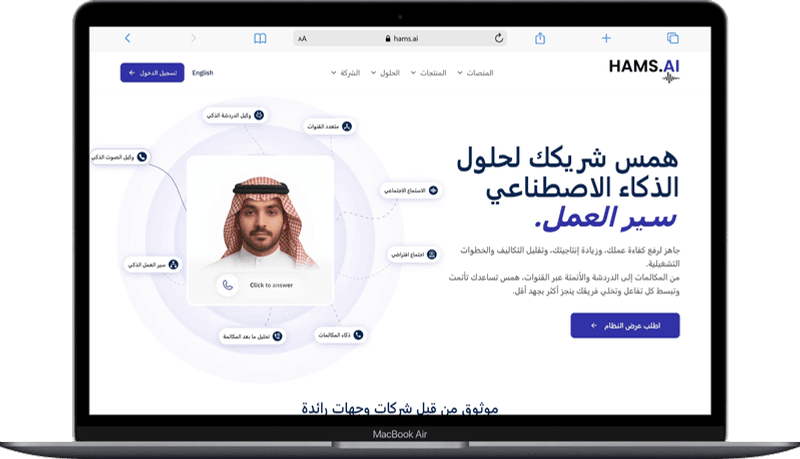
Hams AI
A conversation and customer-service platform powered by AI.
Start from first byte
Let the repetitive work run itself
We build automation that takes over the repetitive daily work — data entry, reports, order follow-up, alerts — so your team is free for the work that actually needs a human.
Any company past its first year accumulates work people do by hand because that's how it has always been done: copying numbers between places, sending the same message to every new customer, assembling a weekly report out of several files. None of it needs a decision — it needs doing. That's exactly what we automate.
We start with an honest inventory: what repeats, and how many hours a month does it eat? Then we rank by hours saved against effort to build, and start at the top. Usually the first two or three tasks pay for the project within months.
Good automation doesn't hide what's happening. Every automated process we build leaves a clear record of what ran and when, raises an alert the moment something fails, and has a path for a person to step in — so you never discover a breakage a week later.
What you get
How we work
Documenting the repetitive work and measuring what it really costs.
Ranking by return, starting with what saves the most time.
One process at a time, each working before we move to the next.
Watching it run and handling the edge cases after launch.
Our work
Frequently asked
In our experience, no. It takes the dead hours off your team — entry, copying, reports — and frees people for work needing judgement. Most of our clients grow output with the same team rather than shrinking it.
Every one we build alerts immediately on failure, leaves a record showing where it stopped, and has a manual path a person can take over. You don't find out a week later.
Usually not. We build automation on top of what you have and connect it together — faster, cheaper and less risky than replacing systems your team already knows.
Tell us about your idea and we'll come back with a clear plan for scope, cost and timeline.